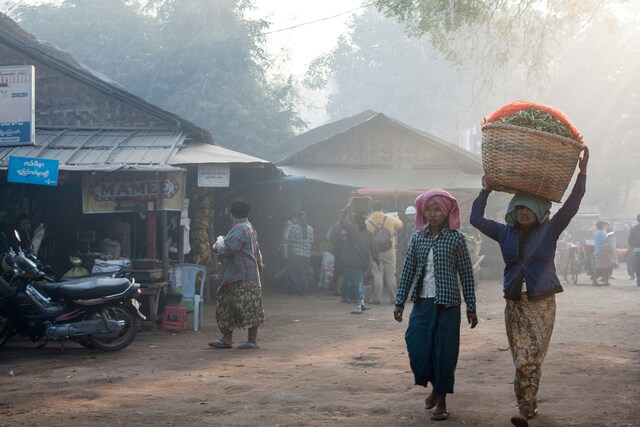
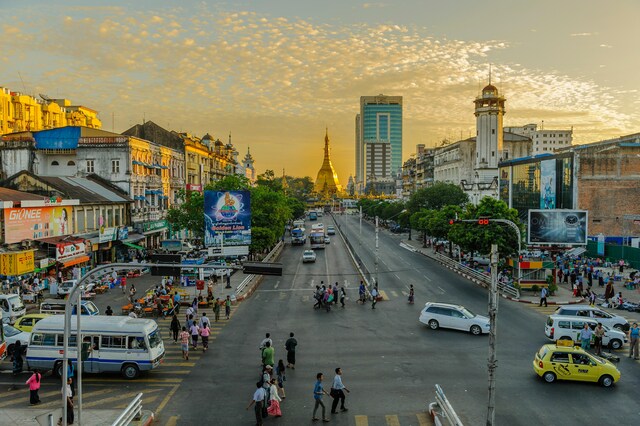
The story of Ram Siakhel is not unlike that of the many thousands of Chin refugees who fled their home country of Myanmar (Burma).
And like so many, he too now calls the Yarra Ranges home. Not entirely by choice, but one he is grateful for.
His childhood began in a small rural village until his early teen years, when his parents moved him and his siblings to a larger city where they could run a business.
For Ram’s parents, education was a necessity for him and his four siblings, so much so, he said “I spent all of my life in Burma studying”.
He attended a private school, but it would be more closely described as a boarding school.
From Grade 8 until he completed the equivalent of Year 12, Ram would only return home during holidays and when the school year finished.
“That is how I studied. So I did not have a very close attachment relationship with my own family members, because I was always away studying,” he said.
“Every time I came home, I worked, I helped my parents run a family business together with all my siblings.”
After finishing his final exams, he went straight to university.
“It was a privilege that I had at that time because of my parents’ commitment to letting us have a good education,” Ram said.
“I feel blessed for that, because my parents were quite determined that they would get all of us, all of my siblings, a good education, because they did not have it. They did not have it, and they wanted us to have it.”
But this didn’t last.
Years later, Ram and his four siblings would have to flee, though his parents remained.
“My parents are currently taking refuge in a small, rural village since the coup, because my father was a campaign manager for the then vice president of the country. They lost everything, all of their businesses, their properties, and were being burnt down to the ground by the military.
“It’s very hard to process and accept it, because it happened very quickly. It did not happen because of them; it’s not as if they broke the law, and they are paying the consequences for their action.
“They are just innocent people; they did nothing to the government, but the government would just bomb the entire town to the ground.”
In 2007, Ram had to flee Myanmar, escaping to Malaysia, because of political instability. During that time, he worked as an interpreter at NGOs, like the International Rescue Committee.
The idea of finding refuge in Australia never crossed his mind.
“At that time, the number of refugees from Australia was quite low. So my expectations about coming to Australia were kind of like zero.”
With a younger brother already settled in the US, Ram expected that to be his final destination as well.
“If someone already has a family member who is in a country the US, it’s very likely that those people will be sent to the same country for reunification purposes. But it did not happen to me.”
Five years after fleeing the country, in 2012, Ram was offered a visa in Australia.
“It was a bit of a surprise for me as well, because it’s quite rare,” he said.
Ram has built a life for himself; he is married and has a three-year-old son. But it’s not without challenges of culture, language and a feeling of survivor’s guilt.
“We are approaching Christmas time. We are Christians. We celebrate Christmas. Most of the time, I’m thinking about my parents’ health and wellbeing. They are getting old, and there is no proper medical facility. There is not even a proper medical professional working in the area.
“If something happened to them, I don’t know what would happen to them. Having this every single day and night definitely causes a lot of anger and frustration.
“That is what I come across in so many people in our community. A lot of people get frustrated because they feel helpless.”
Ram’s three brothers all settled in the US, while his sister found refuge in India. The separation from his family has meant that community connection is all the more important.
Around 4000 people from various Chin groups have settled in the Mooroolbark and Croydon area, with an estimated population of 7000 living in the outer eastern suburbs.
It’s for that reason that church congregations have become such an integral part of life in Melbourne.
“There is a bit of a story about why we love church. We didn’t have any other public institutions built for us by the government (in Myanmar). We did not even have a library. We didn’t even have a town hall.
“That’s why the church is the only place that people can go and gather. We have been doing this for generations. The church plays a very important role; it’s become a very important part of our identity.”