Silica dust has been described as “the new asbestos” and carries much of the same, if not more, concern for the health and safety of those living and working near the inhalable mineral.
This concern is close to the top of the list for the Stop the Montrose Quarry group, and several residents and teachers who live and work in the vicinity of the Montrose quarry.
The heightened concern comes after Boral Resources applied to expand its extraction boundary by 30 acres, pushing the blast impact zone within the EPA recommended 500-metre buffer to houses and Billanook Primary School, for a period of 30-plus years.
Maurice Blackburn dust diseases team senior associate Leah O’Keefe said she works “day in day out with people who are unnecessarily and dangerously exposed to silica dust, who have unfortunately then gone on to develop silica-related diseases”.
The Lung Foundation Australia identifies four common health conditions connected to silica dust exposure, including silicosis, lung cancer, chronic obstructive pulmonary disease (COPD) and other chronic conditions like rheumatoid arthritis.
Air pollution, including dust, according to the Lung Foundation’s website, has both short and long term health impacts.
In the short term, breathlessness, wheezing, and a dry cough, and increased asthma symptoms are common, while in the long term, it can lead to chest infections like pneumonia, stroke and heart or blood conditions.
People with lung disease, pregnant women, older people and children are all more vulnerable to air pollution.
General practitioner Dr Chris Fildes, a Montrose resident since 1988, said he was sympathetic to all of the environmental and social concerns of fellow residents “but as a medical person, the silicosis thing is just enormous”.
“Considering the plethora of child, aged care facilities, kindergartens, primary schools in a three kilometre radius, this silica dust issue is very real indeed,” he said.
Ms O’Keefe said compensation claims are not restricted to just workers, with residents or anyone exposed to silica dust in another context “still (holding) legal entitlements”.
“You still have legal rights to pursue compensation if you’ve been exposed in negligent circumstances, but it’s not through WorkCover anymore,” she said.
“Residents concerned about their potential entitlements by being exposed by living near the mine, Boral still owes them a duty of care.
“It’s foreseeable that people living near or attending kinder or a school near the quarry are going to be impacted by uncontrolled dust, and we know that dust contains silica.
“So if they were diagnosed with silica-related disease, and that’s what caused it, then they also have entitlements through a more general negligence.”
Compensation claims, however, can only be pursued once a diagnosis occurs.
Ms O’Keefe said health and safety laws are governed and enforced by WorkSafe Victoria, and the Environmental Protection Authority protects and enforces regulations relating to the environment.
These laws and regulations are designed to protect workers and citizens, with breaches not taken lightly.
In 2023, Boral was prosecuted for breaching the OHS Act due to a “failure to adequately control dust at the site, putting workers at risk”.
Ms O’Keefe represented workers from the Montrose quarry who sought compensation.
“We like to hope that those sorts of actions by the regulator have helped improve the situation,” she said.
This can be done through engineering controls, isolation and wet processes.
“All of these things stop the dust from spreading, and that protects workers, but that also protects the broader environment and residents nearby.
“In an ideal world, you’d have such good engineering processes in place that there’s no exposure anyway, and the PPE is an additional layer of protection, rather than the first line of defence.”
Following WorkSafe investigations between January 2016 and November 2019, a Boral spokesperson said a new and updated Dust Management Improvement Plan was implemented in January 2022, activating “more stringent dust controls on site”.
The spokesperson said this included “a refurbishment of the dust extraction system, installation of sprinkler systems, ducted vacuums and other dust monitoring systems”.
“We made a significant capital investment to upgrade the dust extraction system at Montrose and optimise the local dust management plan with increased frequency of personal monitoring and mask wearing at site.”
Boral confirmed its management and mitigation of dust included: fixed speed limit for all vehicles, water sprays with dust suppressants, enclosed processing plant with negative pressure dust collection system, water cart for dust suppression using both spray bars on all internal roads and water cannon for wetting stockpiles.
“At Boral, we undertake static dust monitoring, personal exposure monitoring as well as regular environmental (boundary) monitoring at relevant sites. Static dust monitoring and personal exposure monitoring helps us to better understand where potential risks to our people exist and if additional measures are required,” the spokesperson said.
“We continue to monitor and review our dust management approach and work collaboratively with regulators and government to make sure our controls meet and, where possible, exceed required standards to safeguard the health and safety of our people.”
Under regulations, health surveillance for workers must also be conducted at least every five years, and includes respiratory function tests and chest x-rays, Boral said.
Although not an OHS expert, Ms O’Keefe said her understanding is that if the hazardous substance cannot be eliminated, then other methods should be used to “prevent the dust becoming airborne”.
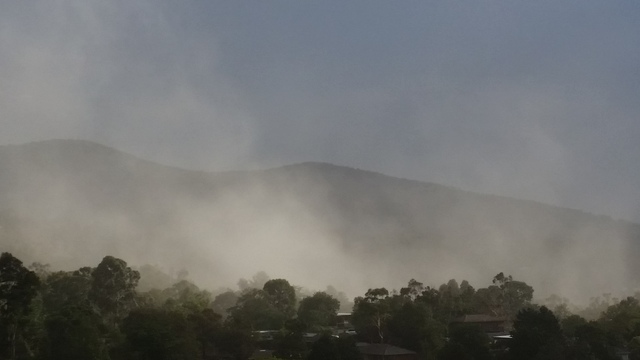
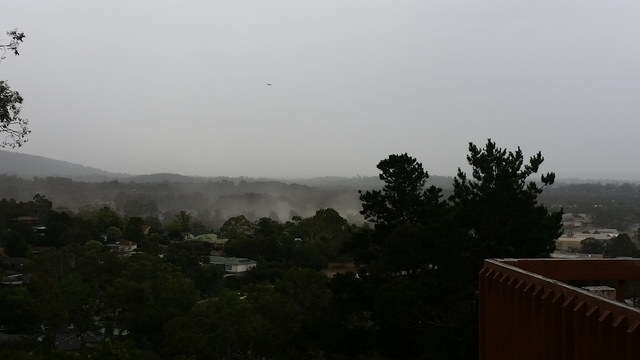
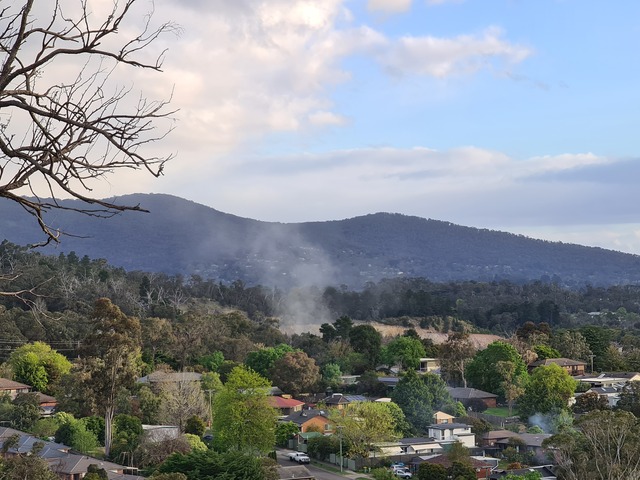
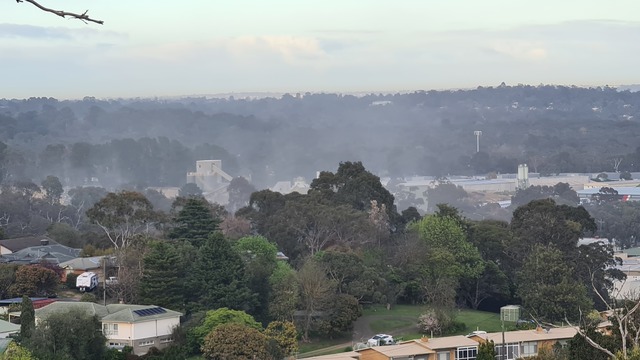
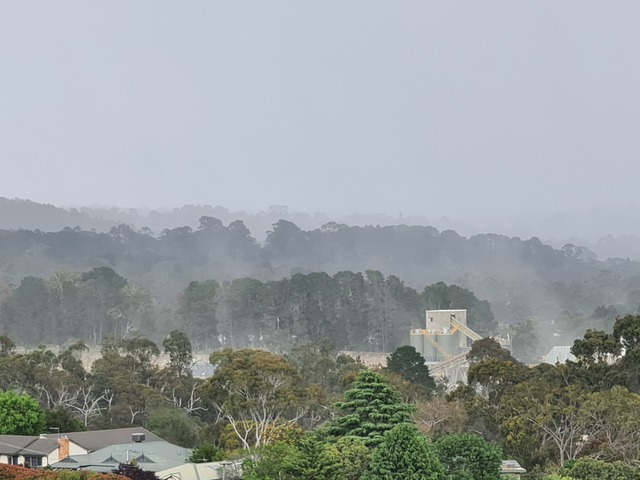
Imagery provided to Star Mail shows, from various angles within people’s properties, the visual impact of dust in the air, something Ms O’Keefe said typically indicates processes are not working.
“All dust is bad; it’s not good for our lungs, and if we can see it, then it’s too high. That’s always my takeaway to people. The moment you can see the dust, there’s too much in the atmosphere. It’s dangerous,” she said.
Ms O’Keefe said the most common comparison and precedence set for silica-related disease cases is the environmental exposure from asbestos factories in the western suburbs of Melbourne.
“The significant increase in asbestos-related diseases that we see in the community around those factories where people grew up…that’s akin to this type of exposure and the long term health impacts that it can have,” she said.
“There’s significant lag time between when you breathe in dust and when it can cause any disease. Some of the lag time that we’re seeing with silicosis is a little bit shorter, but for example, exposure to silica dust causing lung cancer, we wouldn’t expect to see those impacts in the community for another 30 to 50 years.”
That’s what makes asbestos and silica dust “so insidious”, Ms O’Keefe said, because the impact may not be felt for decades after the exposure.
“Exposures in Melbourne’s West, we still see claims of people who grew up in Sunshine in the ‘70s or exposed to asbestos in that context and then not develop a disease until now, and that’s within the expected medical lag time, latency period.”
Having worked in this space for several years and seen the impact of silica dust on her clients, Ms O’Keefe said “residents are really justified in their concern”.
“This is a really hazardous, really dangerous substance, and we know that it can have a significant impact on people’s health, and really the responsibility to ensure that that exposure is prevented for workers, but also for the community,” she said.
Ms O’Keefe said if she could give any words of reassurance to the community, however, it would be that “the risk for residents from exposure is substantially less, the exposure is less, and therefore the risk of developing disease is less”.
But she said that fact does not discredit their right “to be concerned and advocate for improvements”.