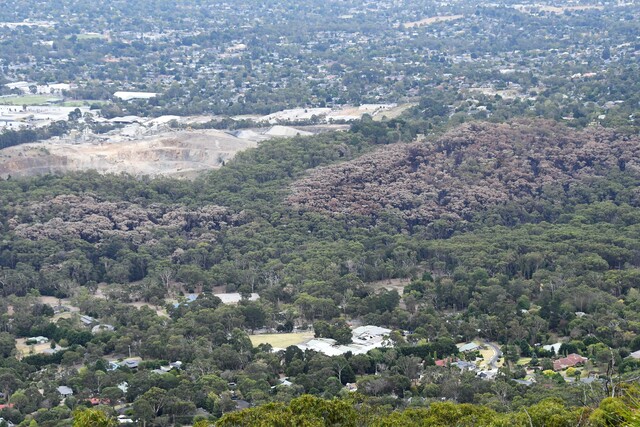
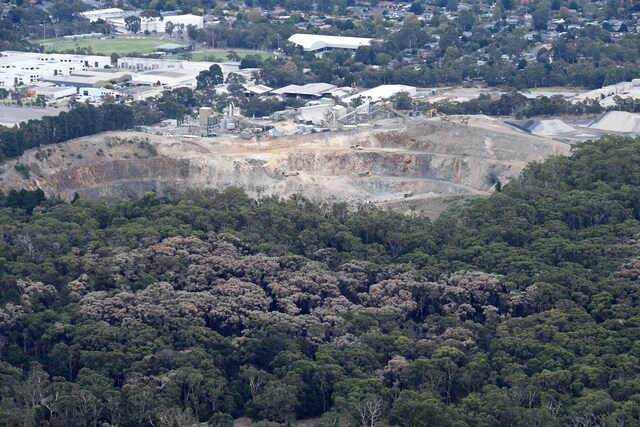
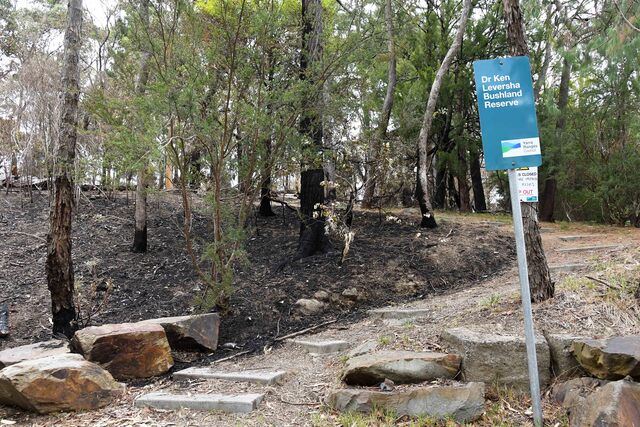
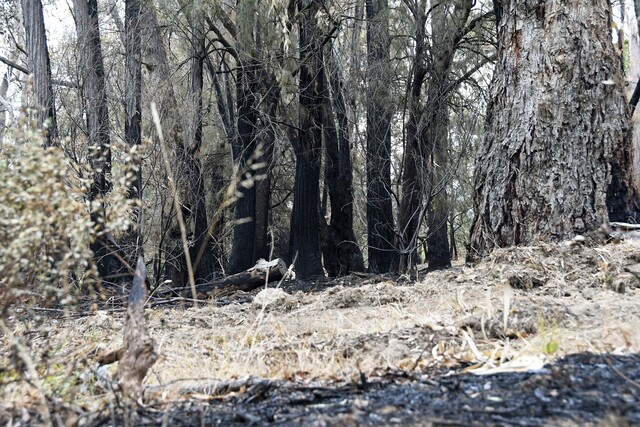
“That bit of land that they’re saying they want to take out is the only land that was left untouched by the fire”.
Montrose resident, retired school teacher, environmentalist and bird photographer Kim Wormald made this statement at the 3 December Stop Montrose Quarry Expansion community meeting.
It was a statement that brought gasps from the gathered 130 people who understood the destruction of the bushfire that ravaged the Dr Ken Leversha Reserve in early 2025.
The Reserve backs onto the Montrose quarry site and is home to a large ecosystem of flora and fauna.
Ms Wormald said “the biggest threat to biodiversity is habitat loss” and Montrose lost a great amount during the fires.
She said “we’re filled with hope for recovery of bushland” as greenery starts to sprout from the blackened trees and earth, but “we need to help reseed everything that was lost”.
Some of the common species found in the reserve, Ms Wormald said include powerful owls, gang gang cockatoos, barn owls, kookaburras, parrots, kingfishers, possums, microbats and frogs, many requiring hollows to survive.
But the proposal would remove 262 trees, alongside 8.779 hectares of native vegetation, from the site, with Ms Wormald stating this would remove hundreds of hollow bearing trees from the landscape.
Aside from habitat loss, Ms Wormald said there would be “an unquantifiable loss from drawdown of the water table, which would permanently damage Bungalook Creek”.
She said in the refused 2008 proposal, Boral proposed to pump in 340,000 litres of water every day for 50 years to counteract the drawdown of the water table.
In response, a Boral spokesperson said “Boral has sought to minimise impacts to native vegetation as much as reasonably practicable with the proposed extraction area initially 10.798 hectares reduced to 8.779 hectares in this application.
“Additional measures to reduce impacts on biodiversity include engineering solutions to reduce run-off, waste water treatment, and rehabilitation works within the buffer areas and post extractive industry activities.”
But Ms Wormald called on the company to “be moral, Boral”.